
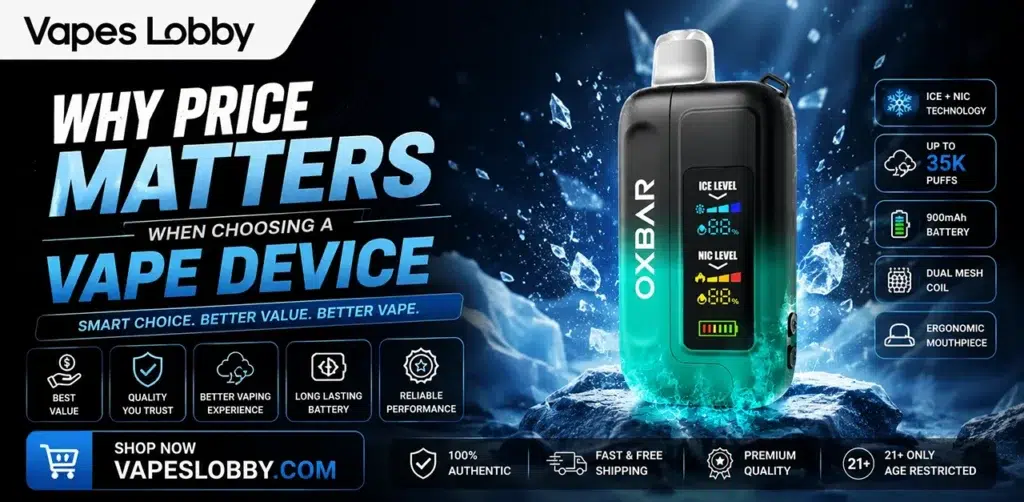
Price is usually the first filter people apply when shopping for a vape device, and often the only one. That instinct isn’t wrong — budget matters — but treating price as a simple “cheaper is better” decision misses what price actually signals about a device: the coil quality inside it, the battery it’s built around, the materials touching the e-liquid, and whether the manufacturer bothered with real quality control at all. Understanding why price matters when choosing a vape device means understanding what you’re actually paying for, not just what number is on the shelf.
Price matters when choosing a vape device because it directly correlates with coil durability, battery reliability, material safety, and manufacturing quality control. Ultra-low-cost devices often cut corners on wicking, leak-proofing, and battery protection circuits, leading to burnt hits, leaks, or early failure. Mid-to-premium devices typically use better mesh coils, verified e-liquid formulations, and tighter QC — meaning the price difference is usually a durability and safety difference, not just a brand markup.
What Vape Device Price Actually Reflects
When you compare a $8 disposable vape to a $25 one, the price gap isn’t arbitrary — it maps almost directly onto what’s inside the device. Coil type is the biggest cost driver: a basic single coil is cheaper to manufacture than a dual mesh coil, but it also saturates unevenly, which is why cheap disposables tend to taste great for the first few hundred puffs and then degrade into a burnt or muted flavor long before the puff count is used up. Battery quality follows the same pattern — a device with a properly rated, protected battery costs more to produce than one with a bare-minimum cell, but the protected version is what prevents overheating, inconsistent vapor output, and premature battery death.
Material sourcing is the less visible cost. Devices using lab-verified e-liquid and food-grade wicking material cost more to produce than those using unverified bulk ingredients, but this is also the difference that affects flavor consistency and, more importantly, what you’re actually inhaling. This is why price and safety aren’t separate conversations in the vape category — for hardware-based products like disposables and pod systems, price is often the most reliable proxy a shopper has for manufacturing standards they can’t otherwise see.
Cheap vs Mid-Range vs Premium: What Changes
| Price Tier | Typical Range | What You Usually Get | Common Trade-Off |
| Budget disposables | Under $10 | Single coil, basic battery, minimal QC | Flavor fades fast, higher leak risk |
| Mid-range devices | $10–$20 | Mesh coil, USB-C rechargeable battery, better wicking | Solid daily performance, fewer premium extras |
| Premium disposables/pod systems | $20+ | Dual mesh coil, protected battery, verified ingredients | Higher upfront cost, longer real-world lifespan |
This kind of tiering is why a direct puff-count comparison alone is misleading. A 20,000-puff device with a weak coil and unprotected battery frequently underperforms a well-built 10,000-puff device in real-world use, because puff count only means something if the hardware can actually sustain it.
The Hidden Cost of Buying the Cheapest Option
The real cost of an ultra-budget vape device rarely shows up at checkout — it shows up two weeks later, when the coil burns out early, the battery dies before the tank is empty, or the device starts leaking into a pocket or bag. At that point, the buyer either replaces the device entirely or downgrades their experience by tolerating burnt hits and inconsistent vapor. When you factor in early replacement, the true cost-per-use of a cheap device often ends up higher than a slightly more expensive, better-built alternative that actually lasts through its rated puff count.
There’s also a nicotine-delivery consistency issue that doesn’t get discussed enough: a coil that saturates unevenly doesn’t just taste worse, it also delivers nicotine unevenly across the device’s lifespan, which matters for anyone using a vape as a harm-reduction or smoking-transition tool rather than a novelty purchase.
How to Judge Price Against Quality Before Buying
Rather than defaulting to the cheapest or most expensive option, it helps to check what the price is actually buying. Coil type is listed on most reputable retailers’ product pages — a dual mesh coil is a stronger signal of durability than an unspecified “mesh coil” claim. Battery specs matter too: a named battery capacity (like 500mAh or 650mAh) paired with USB-C rechargeability suggests the manufacturer engineered the battery to match the puff count, rather than pairing an oversized tank with an undersized cell. Finally, brand transparency around manufacturing – where the device is assembled, whether ingredients are lab-verified, whether the company discloses compliance efforts – is a strong indirect indicator of whether the price reflects real quality control or just markup.
Why This Matters More in 2025’s Vape Market
As of 2025, the disposable vape market has grown crowded with devices claiming inflated puff counts at aggressively low prices, which has made price-to-quality literacy more important for buyers, not less. Regulatory attention on manufacturing standards has also increased, meaning brands that invest in verified ingredients and domestic or closely audited manufacturing are becoming easier to distinguish from brands competing purely on shelf price. For a shopper, this means the smartest question isn’t “what’s the cheapest option,” but “what is this price actually paying for.”
FAQs
Does a more expensive vape device always mean better quality?
Not automatically, but higher price usually correlates with better coil technology, protected batteries, and verified ingredients. The key is checking specific specs – coil type, battery capacity, and manufacturing transparency – rather than assuming price alone guarantees quality.
Why do cheap disposable vapes burn out so fast?
Budget devices typically use single coils and basic batteries that saturate and heat unevenly, causing dry hits and flavor degradation well before the advertised puff count is reached.
Is it worth paying more for a rechargeable vape device?
Yes, in most cases. A USB-C rechargeable battery is usually engineered to match the device’s puff count, which means the battery is less likely to die before the e-liquid runs out – a common failure point in ultra-cheap disposables.
What should I check before buying a vape device based on price?
Look at the coil type (dual mesh is generally more durable), the battery capacity and charging type, and whether the brand discloses information about ingredient sourcing or manufacturing standards.
Can a cheap vape device still be safe to use?
It can be, but safety is harder to verify at very low price points since manufacturers cutting costs often skip lab verification and quality testing. Checking for stated compliance efforts and ingredient transparency is the best way to judge this before buying.
Final Thoughts
Price isn’t just a budget filter when choosing a vape device — it’s one of the clearest indicators available of coil quality, battery reliability, and manufacturing standards. The goal isn’t to always buy the most expensive option, but to understand what a given price point is actually paying for, so the device you choose performs consistently through its full lifespan instead of failing halfway through.
Browse a full range of quality-checked disposable and rechargeable vape devices at VapesLobby.com, where every listed device includes clear coil, battery, and puff-count specs to help you compare price against real performance.